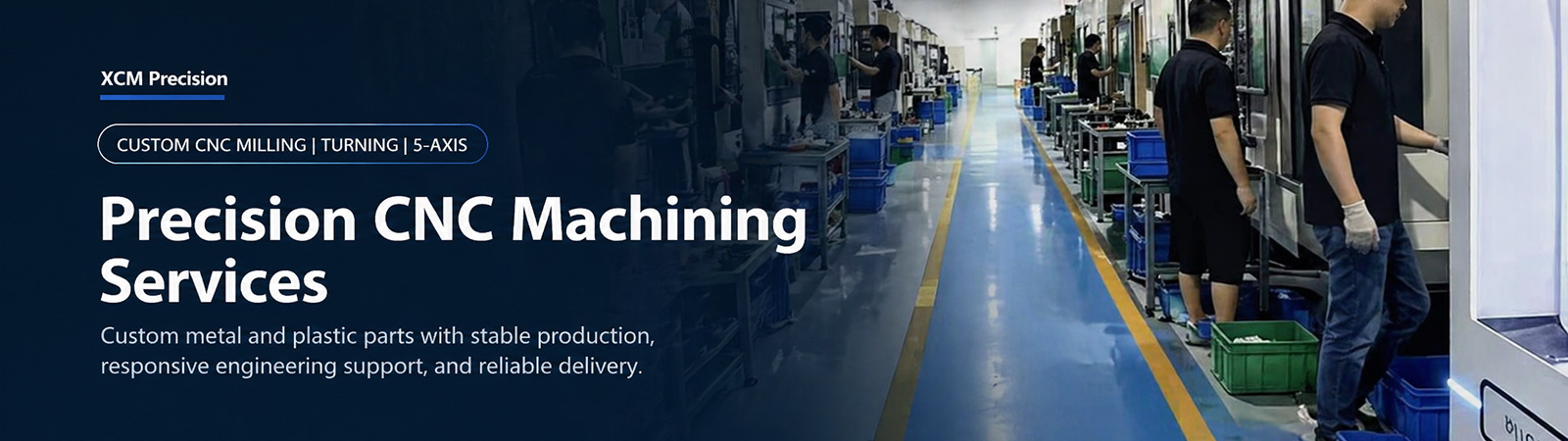












CNC machining workshop
Position > > Resources > > Machining Technology

What Types of Automated Machining Equipment Are Used in Manufacturing?

July 22, 2026 view: 129

Automated machining equipment ranges from stand-alone automatic lathes to complete transfer lines. This guide compares seven major categories: automatic and semiautomatic lathes, special-purpose machines, modular machine tools, NC and CNC machines, machining centers, flexible manufacturing cells, and automated lines. It explains how production volume, product variety, process concentration, tooling, workpiece handling, flexibility, and investment affect selection. The overview helps manufacturers distinguish equipment suited to one-off or batch work from highly productive systems designed for stable mass production in each application.

As manufacturing technology has advanced, higher levels of process automation have delivered substantial productivity gains. Several categories of automated machining equipment have been developed to meet different production-rate and flexibility requirements.

  1. Single-spindle and multi-spindle automatic or semiautomatic lathes. These machines use the inherent capabilities of automatic or semiautomatic stand-alone equipment to perform different operations on many kinds of parts. Machine type and size should be selected according to the required processes, operations, and blank condition. The control method should also reflect the number of product variants, batch size, and frequency of changeovers. A semiautomatic machine can sometimes be equipped with automatic loading and unloading, a tool magazine, and an automatic tool changer to achieve fully automatic production.
  2. Special-purpose automatic machine tools. A special-purpose machine is designed for a specific operation on a specific workpiece, usually from a detailed process analysis. Its transmission system is relatively simple, and the fixture is closely integrated with the machine structure. Rigidity is generally better than that of a general-purpose machine. Because designers face fewer constraints, automation requirements can be considered comprehensively. The disadvantage is that newly designed components may require extensive adjustment. The high cost is difficult to justify for one-off or small-batch production, so these machines are most economical when the product design is stable and volume is high.
  3. Modular machine tools. Approximately 70% to 90% of their components are standardized, reducing design and manufacturing time and allowing partial or complete reconfiguration. A modular machine is designed for a particular workpiece and can use an optimized process plan. It supports operation concentration, simultaneous multi-face and multi-tool machining, and multi-spindle machining of several holes in one setup. These capabilities improve productivity, positional accuracy, and product quality while reducing interoperation handling. Standard components simplify maintenance and lower cost. Typical applications include drilling, counterboring, boring, reaming, facing, internal and external threading, and face milling on housings, shells, and irregular parts. Machines with turret power heads or interchangeable spindle heads can also support medium-volume production.
  4. NC and CNC machine tools. A numerical control (NC) machine uses digital signals to control its motions and automatically follows a specified program, speed, and path. Modern machines normally use computer numerical control (CNC). The source program, including machine operations, process parameters, and dimensional controls, can be entered directly into a programmable computer that controls the machine. When the product changes, the operator normally needs only to load the new part, change the tooling, and replace the CNC program. CNC machines are suitable for one-off work, small and medium batches, and complex parts, and they can also be used in mass production. They improve productivity, reduce labor, respond quickly to design changes, maintain consistent accuracy, and can form part of a flexible manufacturing system or flexible automated line.
    CNC machine
  5. Machining centers. A machining center (MC) is a multi-operation CNC machine equipped with a tool magazine and automatic tool changer. After one setup, it can mill, bore, drill, and ream two or more surfaces automatically. Concentrating operations reduces repeated setups, machine adjustments, part transport, waiting time, and setup-related error. Categories include milling and boring centers, turning centers, grinding centers, punching centers, and multi-spindle centers with automatically interchangeable spindle heads. Machining centers suit complex, demanding parts that would otherwise require several conventional machines, tools, fixtures, setups, and adjustments. They also support mixed-model production of simpler parts mounted in groups on pallets. Their flexibility makes them core equipment in flexible manufacturing systems.
  6. Flexible manufacturing cells. A flexible manufacturing cell (FMC) generally combines one to three CNC machines with material-handling equipment. It includes a tool store, workpiece storage station, and cell controller. The machines can automatically load and unload parts, change tools, inspect machining accuracy, and monitor tool wear. An FMC can perform a limited sequence of operations continuously and is well suited to small and medium batches.
  7. Automated machining lines. An automated line connects a group of automatic machine tools and auxiliary devices in process order through a workpiece-transfer system and a control system. Workpieces move automatically through each station at a defined production takt and complete all or part of the required process. Lines can use general-purpose, special-purpose, or modular machine tools. They provide stable quality, high productivity, and lower labor intensity, but the workpiece normally remains fixed or changes very little, so they are primarily suited to mass production.

Need CNC Machining Engineering Support?

Share your drawing, material, tolerance target, or application question. Our engineering team can help review the machining route and suggest a practical next step.

Contact Form product-list

STEP, IGS, STL, DWG, DXF, PDF, JPG or ZIP. Max. 50 MB. Multiple or large files? Email: [email protected]

Related Articles