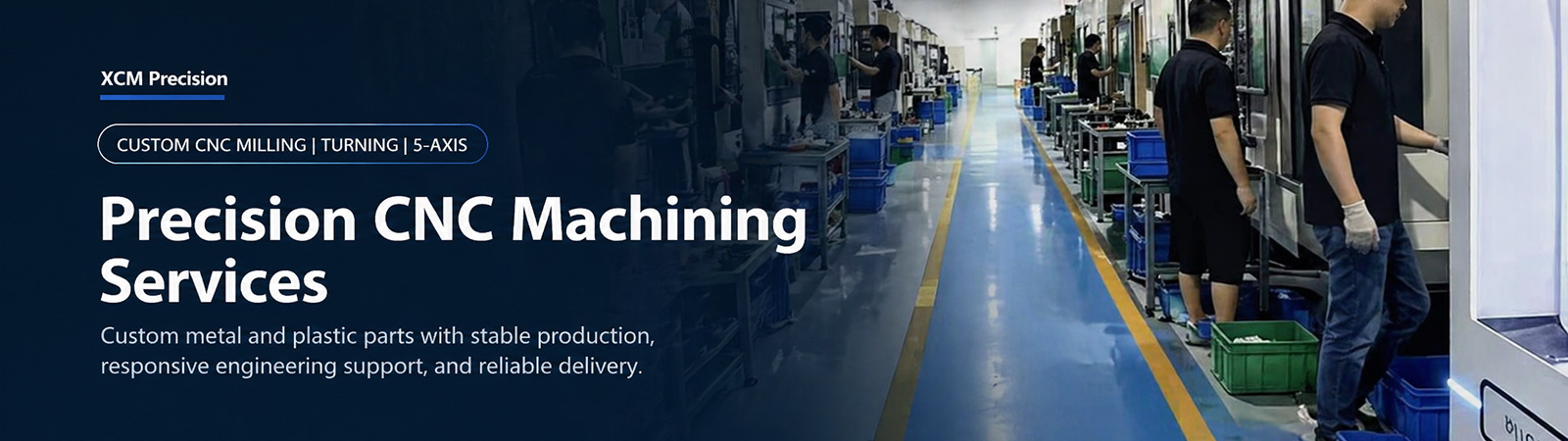
CNC machining workshop
Position > > Resources > > Machining Technology

How Are Computers Transforming Mechanical Design and Manufacturing?

July 14, 2026 view: 354

Computers now support nearly every stage of mechanical design and manufacturing. This article reviews the roles of CAD software, CNC machining, computer simulation, cloud manufacturing, 3D printing, virtual reality, and artificial intelligence. It also outlines the main directions shaping the field: more intelligent manufacturing, more sustainable processes, and closer collaboration across the product life cycle. Together, these technologies help manufacturers improve design accuracy, production efficiency, flexibility, quality control, and resource use. They also make it easier to respond to changing product and production requirements.


Overview

Computers have become an indispensable part of modern mechanical design and manufacturing. Their applications are widespread in the following areas.

  1. Mechanical design software: Computer-aided design (CAD) software has become a standard tool for mechanical designers. It helps designers create fast and accurate designs through modeling, drafting, simulation, and related functions.
  2. CNC machining: Computer numerical control (CNC) machining is widely used to manufacture many types of mechanical parts. CNC systems can automatically control machine tools according to CAD models, greatly improving manufacturing efficiency and accuracy. NC technology is widely used in aerospace, automotive, medical, and other industries.
  3. Simulation: Computer simulation can model the performance of mechanical systems under different operating conditions. It helps designers predict and optimize a design while reducing prototype cost and development time.
  4. Cloud manufacturing: Internet technologies and cloud-computing platforms can digitalize, network, and intelligently connect information throughout the mechanical manufacturing process, making production more efficient, flexible, and sustainable.
  5. 3D printing: 3D printing is an emerging manufacturing technology that uses computer-controlled equipment to build material layer by layer and create the required product. It offers major advantages for low-volume production and rapid prototyping.
  6. Virtual reality (VR): Virtual reality can help engineers build mechanical models on a computer, perform simulated testing, and optimize designs. VR can also be widely used for training and maintenance.
  7. Artificial intelligence (AI): AI can help mechanical manufacturers automate production and quality control, improving productivity and reducing costs. It can also be applied in robots and automated equipment to support more efficient production and operations.

3d printed metal parts

Future Development Trends

The field is moving toward intelligent and sustainable manufacturing.

  1. Intelligent manufacturing: As AI and the Internet of Things continue to develop, mechanical design and manufacturing will become increasingly intelligent. Technologies such as automated design optimization, intelligent production scheduling, and predictive maintenance are expected to see broader application.
  2. Sustainable manufacturing: As environmental protection receives greater global attention, mechanical manufacturing will move toward more environmentally responsible and sustainable practices. The use of new materials and research into green manufacturing processes will become important development directions.
  3. Collaborative design and manufacturing: Future mechanical manufacturing will place greater emphasis on collaboration among participants throughout the product life cycle. Cloud-based supply-chain management and digital-twin applications, for example, will help make manufacturing smarter, more efficient, and more precise.

3d printed metal parts

Need CNC Machining Engineering Support?

Share your drawing, material, tolerance target, or application question. Our engineering team can help review the machining route and suggest a practical next step.

Contact Form product-list

STEP, IGS, STL, DWG, DXF, PDF, JPG or ZIP. Max. 50 MB. Multiple or large files? Email: [email protected]

Related Articles