













China Brass CNC Machined Parts Factory
Overview
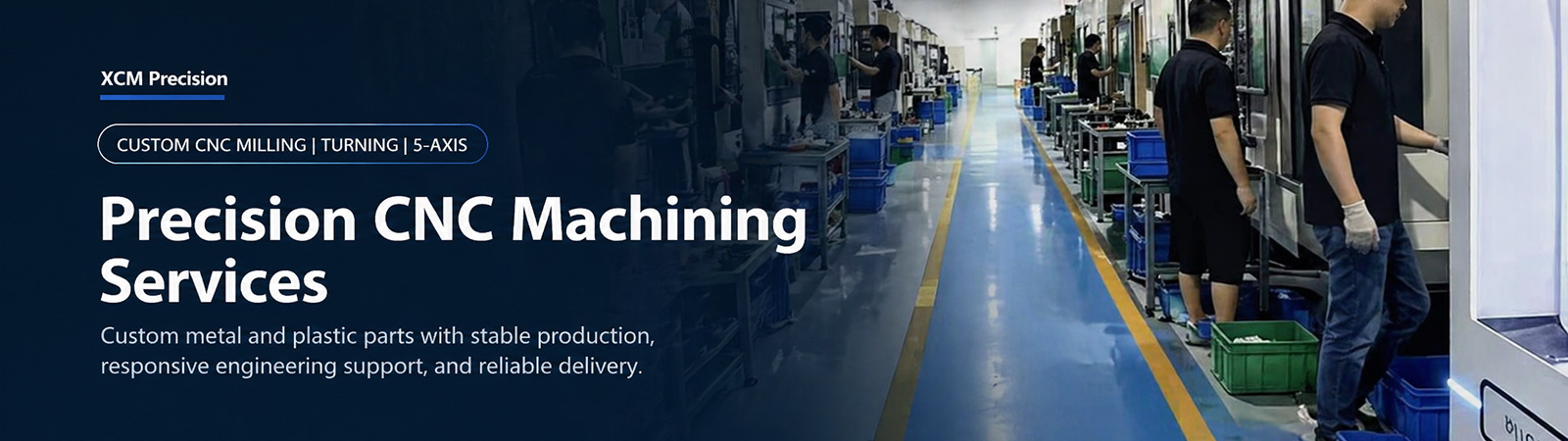
XCM CNC is a brass CNC machining factory in Shenzhen, operating under ISO 9001 and IATF 16949 quality systems and using equipment such as Brother machining centers and Jingshang automatic lathes for small-part batch production.
The factory can organize schedules around grades such as C360, C260, and CW617N, together with lead-free requirements and batch consistency control. MOQ can begin from 1 piece, with standard lead time often reviewed in the 10-15 day range. Nickel plating, anti-tarnish treatment, dimensional reinspection, material certificates, and protective packaging can all be coordinated by order for repeat supply of conductive connectors and instrument parts.

Key Capabilities
Machining Parameters and Tolerances
- Materials: C360 (free-cutting brass), C260 (cartridge brass), CW617N (European grade), selected by conductivity, wear resistance, and lead-free requirement
- Tolerance: +/-0.003 mm (+/-0.00012 inch), IT5 or IT6 accuracy, +/-0.01 mm shaft/bore fits; h6/H7 available
- Surface Finish: Ra 0.8 um turned surfaces, Ra 1.6 um milled contact faces, Ra 3.2 um general machined surfaces
- GD&T: Coaxiality 0.012 mm, runout 0.01 mm, cylindricity 0.011 mm, roundness 0.006 mm, position 0.015 mm
- Max Size: 3-axis milling 3000 x 1600 x 1400 mm; turning diameter 1250 x length 2000 mm
- Surface Treatment: Nickel plating (3-20 um), tin plating, anti-tarnish finish, passivation by order review
- Thread: Internal from M1.4, external from M2.0, up to M220; NPT / BSP / G / PT pipe threads; depth up to 4xD
- Batch Range: 1 piece to repeat production; standard lead time 10-15 days
Batch Turning for Terminals, Fittings, and Bushings
Batch turning of brass terminals, fittings, and bushings can run continuously on automatic lathes, with turned outer surfaces reaching Ra 0.8 um and shaft tolerances reviewed to h6 and h7 classes. Internal threads can start from M1.4, pipe threads can support NPT, BSP, G, and PT, and thread depth can reach 4xD. Batch-size consistency can be managed through lot sampling, while the scope of full inspection for critical dimensions is defined by order.
Large-Format and Structural Brass Machining Capacity
Three-axis milling travel up to 3000 x 1600 x 1400 mm and turning capacity up to diameter 1250 mm and length 2000 mm cover both micro terminals and larger installation blocks in brass. For larger parts above 500 mm, tolerance can be reviewed around +/-0.05 mm. Keyway width can start from 1.0 mm, groove width from 0.5 mm, flatness can reach 0.02 mm, and parallelism can be controlled around 0.03 mm over a 1030 mm datum length when the structure allows it.
Thread and Keyway Machining for Repeat Supply
Repeat-order threaded fittings and keyway parts can share standard tooling, datums, and inspection flow to reduce process variation from batch to batch. Threads are checked by go and no-go gauges, sealing faces can be machined to Ra 0.8 um, and hole position can be controlled around 0.015 mm. Keyways can follow the drawing standard from a minimum width of 1.0 mm, with fit surfaces reviewed around +/-0.003 mm for stable supply of bushings and transmission parts.
Batch Inspection Traceability and Material Certification
Batch brass parts can be supplied with material certificates, FAI reports, and plating thickness reports according to the order. Inspection can use equipment such as Hexagon CMM and a Leader height gauge. Critical dimensions can follow sampling or 100 percent inspection, threads are checked by go and no-go gauges, and fit surfaces can be rechecked after nickel plating. Records are archived by batch for repeat-order traceability and export documentation.
Specifications
| Product Name | China Brass CNC Machined Parts |
|---|---|
| Manufacturer | XCM CNC |
| Factory Location | Shenzhen, Guangdong, China |
| Quality System | ISO 9001, ISO 13485, IATF 16949, GJB9001C |
| Machining Process | CNC turning, CNC milling, drilling, tapping, deburring |
| Material | Brass |
| Material Grade | C360, C260, CW617N with grade and lead-free requirement confirmed per order |
| Tolerance | +/-0.03 mm standard CNC tolerance, critical dimensions by drawing review |
| Surface Roughness | Ra 3.2 um general machined surfaces, Ra 1.6 um fit surfaces by requirement |
| Surface Treatment | Nickel plating, tin plating, anti-tarnish finish, or polishing by order review |
| Inspection | Dimensional inspection, FAI, material certificate, and surface treatment report by order requirement |
| Application | Terminals, fittings, inserts, bushings, and general conductive connection parts |
| Key Features | Small-part batch consistency, threaded fittings, plating recheck, protected packing, and anti-tarnish care |
| Critical QC Requirements | Material certificate, surface treatment report, key dimension sampling or full inspection scope, and packing protection |
| Batch Range | 1 piece MOQ to repeat production batches by schedule review |
| MOQ | 1 Piece |
| Typical Lead Time | 10-15 business days after drawing review |
| Drawing Formats | STEP, IGS, DWG, PDF, X_T |
| Material Certificate | Material certificate by order requirement |
Applications
Batch Supply of Electrical Connectors, Terminals, and Shielding Parts
Typical Parts: Wiring terminal, shield sleeve, pin holder
Brass suits small-lot through repeat-order supply of conductive terminals and shielding parts, with turned outer surfaces at Ra 0.8 um and minimum drilled hole size starting from 0.2 mm. The factory can coordinate material certificates, dimensional inspection, and surface-treatment reports by order, while batch-size consistency is managed through lot sampling.
Valve, Plumbing, and Pneumatic Fittings
Typical Parts: Valve fitting, threaded plumbing fitting, pneumatic connector
Brass fittings are easy to machine for threads and sealing chamfers, with pipe standards such as NPT, BSP, G, and PT supported and sealing faces machined around Ra 0.8 um. Before production, grade, plating scope, and thread inspection requirements should be confirmed, and packaging should protect both threads and sealing faces.
Sensor Fittings and Fluid Connectors for Automotive Support Parts
Typical Parts: Sensor fitting, oil-line fitting, conductive seat
Automotive-adjacent brass fittings often need stable threads, conductive contact, or fluid-connection faces, and brass can balance machining efficiency with common corrosion-resistance expectations. Final application requirements still follow the customer drawing and industry rules, while delivery control focuses on lot traceability and reinspection records.
Guide Bushings, Plain Bearings, and Adjustment Fittings for Automation
Typical Parts: Guide bushing, plain bearing, adjustment fitting
Guide bushings and adjustment parts in automation equipment often need reliable machined surfaces and stable fits, with shaft dimensions reviewed to h6 and h7 classes and fit surfaces around +/-0.003 mm. Repeat orders can standardize bar size, bore size, and outer diameter while using separated packaging to protect fit faces.
Why Choose Us
Certified Systems and Equipment Coverage
The factory organizes quality flow under ISO 9001, ISO 13485, IATF 16949, and GJB9001C, while using DMG, Mazak, Matsuura, Brother, and other equipment for brass turning, milling, and multi-face machining. For brass fittings, terminals, and small precision parts, drawing review can confirm conductive faces, threads, and surface-treatment requirements together.
Broad Size Coverage
The machining range covers both small connector-scale parts and larger structural blocks. Three-axis travel can reach 3000 x 1600 x 1400 mm and turning diameter can reach 1250 mm, while the actual route still depends on fixturing, grade, and surface-treatment requirements.
Tiered Equipment Strategy for Cost and Quality
XCM CNC uses a tiered equipment mix from mainland China, Taiwan, Japan, and Europe or the US. Lower-tolerance work can be arranged on domestic or Taiwan machines, while tighter precision work can move to imported machines such as DMG or Mazak. That matching helps control cost without putting simple features onto high-hour-rate equipment.
Batch Traceability and Material Certificates Archived by Order
Brass bar grade, lot information, and lead-free requirements can be tied to specific parts and inspection records by order, which suits long-running repeat orders and export projects. For terminals, fittings, and shielding parts, material proof, surface-treatment requirements, and the critical-dimension sampling scope can be locked first and then archived by batch.
Plating Reinspection and Protective Packaging Delivered Together
Nickel plating, anti-tarnish treatment, post-plating reinspection, and isolated packaging can be arranged as one delivery flow for batch brass parts so surface treatment and shipment timing stay aligned. Foam-separated cartons or wooden cases can be used for export shipments of connectors, valve fittings, and small instrument parts.
FAQ
How do you choose C360, C260, or CW617N for batch brass parts?
Selection usually starts from conductivity, wear, self-lubrication, forming demand, and whether a lead-free requirement applies. Final grade choice still depends on the drawing, contact faces, post-treatment, and the real use condition, so one material name should not be substituted automatically for another.
How do you manage batch consistency for small brass turned parts?
Small-part consistency is managed through standardized bar stock, fixed tooling parameters, and lot-based dimensional sampling. The scope of full inspection or sample inspection for key dimensions is defined by order, threads are checked batch by batch with go and no-go gauges, and the related records are archived for traceability.
What is the typical lead time for repeat brass part orders?
Standard lead time is often reviewed in the 10-15 day range depending on part complexity and order quantity. Sample lead time is commonly 3-7 days, and after sample approval, repeat orders can follow a fixed scheduling rhythm that already includes outside plating and packaging time.
What is the difference between brass and bronze for custom CNC parts?
Brass is more commonly reviewed for conductive fittings, valve connectors, and easy-to-machine small parts, while bronze is more often considered for wear or sliding-contact applications. Final selection still depends on grade, load, conductivity, and surface-treatment conditions, so the two should not be treated as fully interchangeable.
Can your factory track brass bar stock and no-lead requirements by order?
Yes. Brass grade, incoming lot, and lead-free requirements can be tied to specific parts and inspection records by order. If the project includes export, environmental, or customer-specified grade restrictions, certificate and substitution limits should be defined before the order is released.
What packing methods do you use for brass batch shipments?
Small brass parts can use foam-separated cartons, with separate protection on threads and fit faces. Export shipments can also use reinforced wooden cases. DHL, FedEx, UPS, and sea freight can all be supported, while the exact packaging method still depends on part size and order quantity.
Request a CNC Machining Quote from XCM CNC
Send us your drawings. Our team will review the file and reply with a machining quote. MOQ: 1 piece, with competitive low-cost pricing.


